
Tucked away in the northern corners of Himachal Pradesh, Spiti Valley is a landscape of stark, majestic contrasts. Translated literally as 'The Middle Land', Spiti sits directly between the green hills of mainland India and the mystical high plateaus of Tibet. Here, towering barren peaks touch a pristine blue sky, ancient monasteries cling precariously to crumbling cliffs, and the turquoise Spiti River carves its way through wide gravel beds. Traveling to Spiti is not just a standard holiday; it is an expedition into one of the most remote, challenging, and raw inhabited regions on Earth, where nature reigns supreme and human life adapts beautifully. This comprehensive guide will walk you through everything you need to know about navigating this breathtaking cold desert, from its ancient Buddhist heritage and highest villages to the practicalities of acclimatization and high-altitude survival.
The Monastic Wonders of Spiti
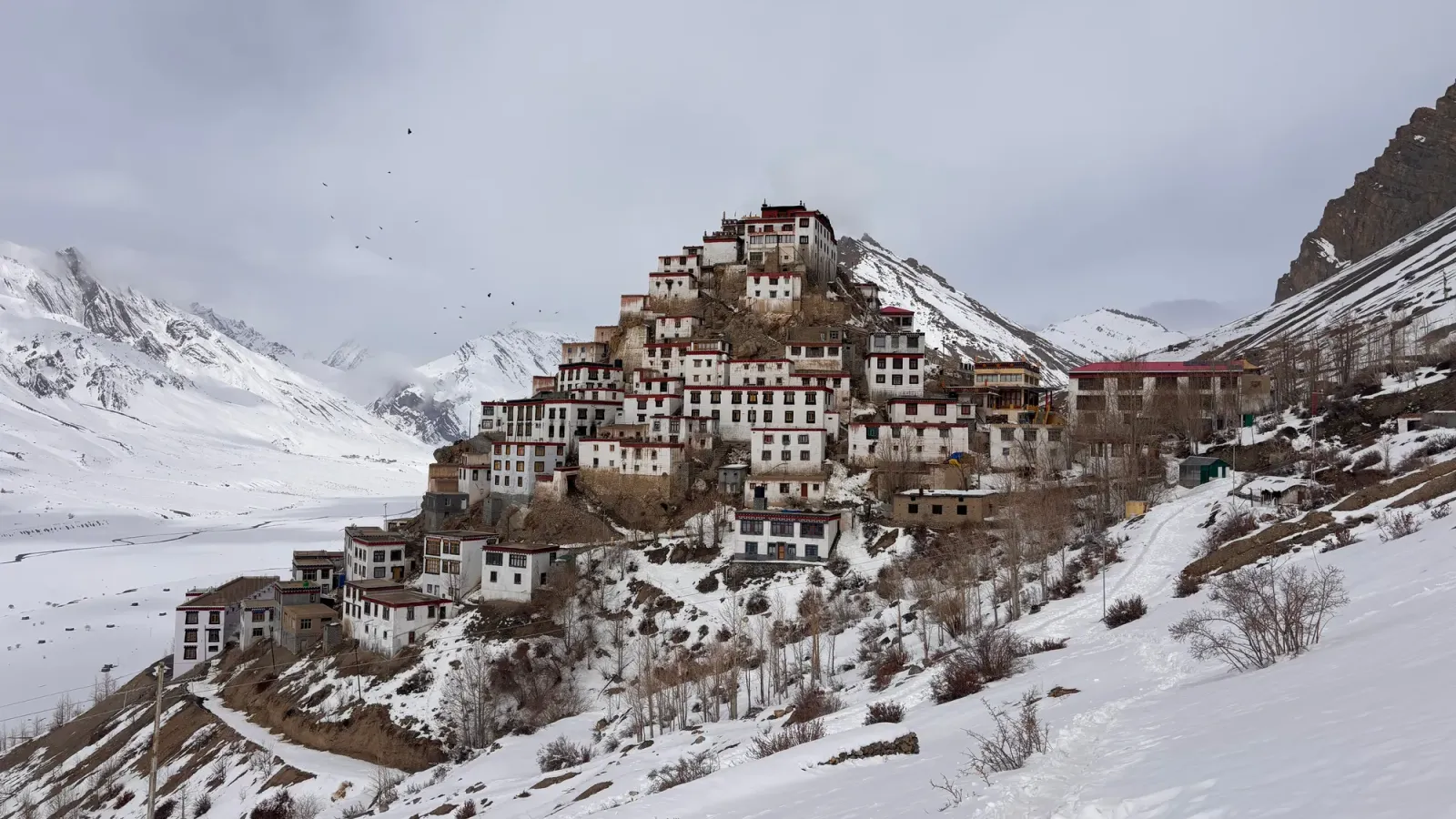
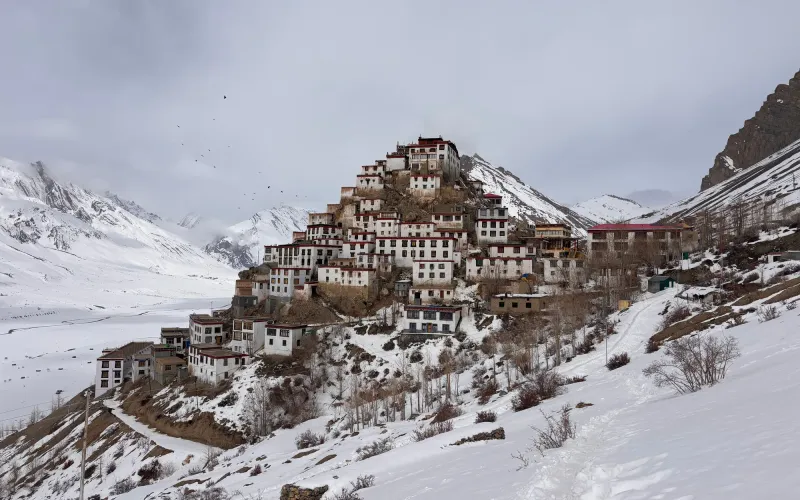
Spiti is often referred to as 'Little Tibet' due to its close cultural ties, Buddhist heritage, and shared geographical characteristics. The valley serves as a sanctuary for some of the oldest active Buddhist monasteries in the world. Key Monastery (Kee Gompa), perched dramatically on a conical hill at an altitude of 4,166 meters, resembles a fortress stacked with white, whitewashed rooms. Walking through its dark, incense-laden corridors, you hear the low chants of monks, see ancient thangkas (Tibetan paintings), and feel the weight of nearly a thousand years of continuous history.
The monks here are incredibly hospitable, often offering visitors hot cups of butter tea and sharing stories of the monastery's resilience against Mongol invasions and harsh winters. Key Gompa is not just a tourist site; it is a functioning religious training center where hundreds of lamas receive their education in Buddhist scriptures, philosophy, and meditation. Witnessing the morning prayers here, as the first rays of the sun hit the Spiti river below, is a profoundly spiritual experience that stays with travelers forever.
Further down the valley lies Dhankar Monastery, built on a wind-eroded cliff overlooking the confluence of the Spiti and Pin rivers. Its fragile mud-brick structure seems to grow straight out of the mountain face. Visiting Dhankar is a humbling experience; standing in its tiny, historic prayer room while looking out at the massive valley below makes one appreciate the sheer architectural genius of the monks who constructed it using only mud, stone, and timber centuries ago.
Dhankar was once the traditional capital of the Spiti Valley Kingdom, and its name literally translates to 'Fort on a Cliff'. For those willing to hike further, a steep two-kilometer trail leads from Dhankar Monastery to the sacred Dhankar Lake. This pristine body of water reflects the changing hues of the Himalayan sky and offers a quiet, meditative space away from the main tourist routes. Sitting by the lake, you can truly absorb the silent, imposing magnitude of the Himalayas.
In the quiet of Spiti’s ancient monasteries, the silence is so profound that it becomes a physical presence, wrapping around you like the cold mountain air.
Reaching the Roof of the World: High Altitude Villages
Spiti boasts some of the highest inhabited villages on the planet, each offering a unique glimpse into mountain survival and minimalism. Hikkim, located at an astounding elevation of 4,440 meters, houses the world's highest post office. Sending a postcard from this remote outpost to your loved ones is a mandatory ritual for travelers. The postmaster, who has operated this remote station for decades, coordinates mail that travels by foot down rugged slopes before reaching local vehicles.
Just a short drive away is Langza, famously known as the 'Fossil Village'. Langza is instantly recognizable by the giant golden Buddha statue standing sentinel over green barley fields and snow-capped peaks. Millions of years ago, the Himalayas were submerged under the Tethys Sea. Today, the village paths and surrounding mountains of Langza are rich in marine fossils. Local children often show you 'shaligrams' (fossilized shells), and discovering these ancient oceanic remnants at 14,000 feet is a mind-bending experience.
Continuing on the high-altitude circuit, you reach Komic, the highest village in the world connected by a motorable road, sitting at an elevation of 4,587 meters. Komic is home to a small, ancient monastery and a handful of local houses. The air here is incredibly thin, and visitors are advised to move slowly. Despite the extreme conditions, the warmth of the locals is unparalleled. Staying in a homestay in these villages allows you to experience traditional Spitian life—gathering around a tandoor (iron stove) in the center of the living room, drinking yak butter tea, and listening to folklore.
These villages are entirely dependent on solar power and limited water resources. Exploring them teaches a valuable lesson in sustainable living. The architecture is perfectly adapted to the cold: thick mud walls for insulation, small windows to trap heat, and flat roofs used for drying apricots, peas, and firewood for the long, brutal winter months when the valley is completely cut off from the rest of the world.
The Hidden Treasures of Tabo and Gue
Often bypassed by travelers rushing towards Kaza, Tabo Monastery is arguably the most historically and artistically significant site in the valley. Founded in 996 AD, it is often called the 'Ajanta of the Himalayas' due to its incredible collection of stucco statues, frescoes, and murals covering the walls of its dark mud chambers. Unlike Key Monastery, Tabo sits on flat valley grounds, protected by a simple mud wall that hides some of the finest surviving examples of Indo-Tibetan art.
The main assembly hall of Tabo Gompa features a magnificent mandala of 33 life-sized clay statues of bodhisattvas attached to the walls. Because the monastery was built using mud and wood, no flash photography is allowed inside to protect the ancient pigments. Stepping into the dimly lit sanctum is like stepping back a millennium in time; the sheer detail and preservation of the artwork are a testament to the dry, cold climate of the desert.
Deep in a side valley near the Indo-Tibet border lies the remote village of Gue. This silent outpost houses a unique relic: the naturally preserved mummy of a 15th-century Buddhist monk named Sangha Tenzin. Discovered by ITBP personnel following an earthquake in 1975, the mummy is a source of deep reverence for the locals.
Local legends say the monk initiated his own mummification through a slow, agonizing process of meditation and starvation to save his village from a devastating plague. Today, the mummy remains remarkably intact, with hair and teeth still visible, sitting in a glass chamber inside a new hilltop temple overlooking the stark border mountains. It is one of the only naturally mummified monks found in the Indian Himalayas.
The Landscape and Wildlife of the Cold Desert
The geography of Spiti is fundamentally different from the rest of Himachal Pradesh. As you cross the Rohtang or Kunzum Pass, the lush green pine forests abruptly give way to a lunar landscape. The mountains here are stripped of vegetation, revealing complex geological folds in shades of ochre, rust, purple, and grey. Wind erosion over millennia has carved the rocks into bizarre, otherworldly shapes, creating a surreal environment that photographers dream of.
One of the crowning jewels of this landscape is Chandratal Lake, the 'Moon Lake'. Situated at an altitude of 4,300 meters, this crescent-shaped lake boasts water so clear and blue that it perfectly mirrors the surrounding snow peaks. Camping a few kilometers from Chandratal and hiking to its shores for sunrise is considered one of the ultimate Himalayan experiences. The silence here is absolute, broken only by the wind.
Despite its barren appearance, Spiti is home to incredibly resilient wildlife. Pin Valley National Park, a side valley branching off from the main Spiti river, is renowned as the realm of the elusive Snow Leopard. Known locally as the 'Ghost of the Mountains', spotting a snow leopard requires immense patience, luck, and usually a dedicated winter expedition. The park is also home to the Himalayan Ibex, Blue Sheep (Bharal), Red Fox, and the Himalayan Brown Bear.
Bird watchers will also find Spiti fascinating. Golden eagles soar high on the thermal currents above the valleys, while Himalayan snowcocks and chukars scurry among the rocky outcrops. The high-altitude wetlands around Chandratal and other glacial lakes serve as crucial resting grounds for migratory birds making their perilous journey across the Himalayas.
Local Cuisine: The Flavors of the High Desert
Food in Spiti is heavily influenced by Tibetan cuisine, designed to provide high energy and warmth in a freezing climate. The staple diet revolves around barley, wheat, potatoes, and locally grown peas. Thukpa, a hearty noodle soup filled with vegetables and sometimes meat, is the ultimate comfort food after a long day of high-altitude travel. Momos (steamed or fried dumplings) are ubiquitous and are often served with a fiery chili garlic dip.
A lesser-known but highly traditional Spitian dish is Skyu, a heavy stew made with kneaded dough balls, potatoes, and root vegetables. Another must-try is Tingmo, a soft, spongy steamed bread that is perfect for soaking up spicy gravies. Because fresh vegetables are scarce for most of the year, locals rely heavily on dried vegetables, fermented foods, and dairy products.
Dairy plays a crucial role in the high-altitude diet. Yak cheese, locally known as Chhurpi, is dried into rock-hard cubes that locals chew on for hours to generate heat and energy. You will also frequently be offered Yak Butter Tea. Salty, creamy, and distinctively flavored, this tea is an acquired taste for many travelers, but it is an absolute necessity for surviving the dry, cold desert air.
In recent years, the main town of Kaza has seen a rise in modern cafes catering to travelers, offering everything from Israeli shakshuka to Italian wood-fired pizzas. While these are delightful, we highly recommend spending a few nights in a village homestay to eat in a traditional Spitian kitchen. Sharing a home-cooked meal with a local family around the tandoor is an experience that commercial restaurants cannot replicate.
Practical Information and Acclimatization
A trip to Spiti requires careful planning, physical preparation, and respect for the altitude. The valley can be accessed via two distinct routes: from Shimla through the Kinnaur Valley, or from Manali over the Rohtang and Kunzum Passes. The Shimla route is open year-round and allows for gradual acclimatization, making it the preferred route for travelers wishing to avoid acute mountain sickness (AMS). The journey takes you through the stunning Baspa Valley and the treacherous cliff-hanging roads of Kalpa.
The Manali route, on the other hand, is only open during the summer months (June to September). It offers a much shorter, albeit significantly rougher, journey across unpaved roads, glacial melts, and active water crossings. Driving this route is an adventure in itself, requiring a high-clearance SUV, an experienced driver, and nerves of steel. The transition from the lush green of Manali to the barren brown of Spiti over the Kunzum Pass is jarring and beautiful.
Acclimatization is the single most important factor for a successful Spiti trip. The rapid gain in altitude can cause AMS, characterized by headaches, nausea, dizziness, and fatigue. We recommend drinking 3-4 liters of water daily, avoiding strenuous activity on your first two days, abstaining from alcohol, and consulting with a doctor regarding Diamox before your trip. If symptoms worsen, the only cure is immediate descent.
Finally, pack smart. The weather in Spiti is notoriously unpredictable. A bright, scorching sunny day can rapidly turn into a freezing, windy evening. Layering is essential. Pack thermal innerwear, a good quality fleece, a windproof down jacket, UV-protection sunglasses, and high-SPF sunscreen. For foreign nationals, Inner Line Permits (ILP) are required to travel close to the Tibetan border and can be obtained easily at Reckong Peo or Kaza.
MistyCurves