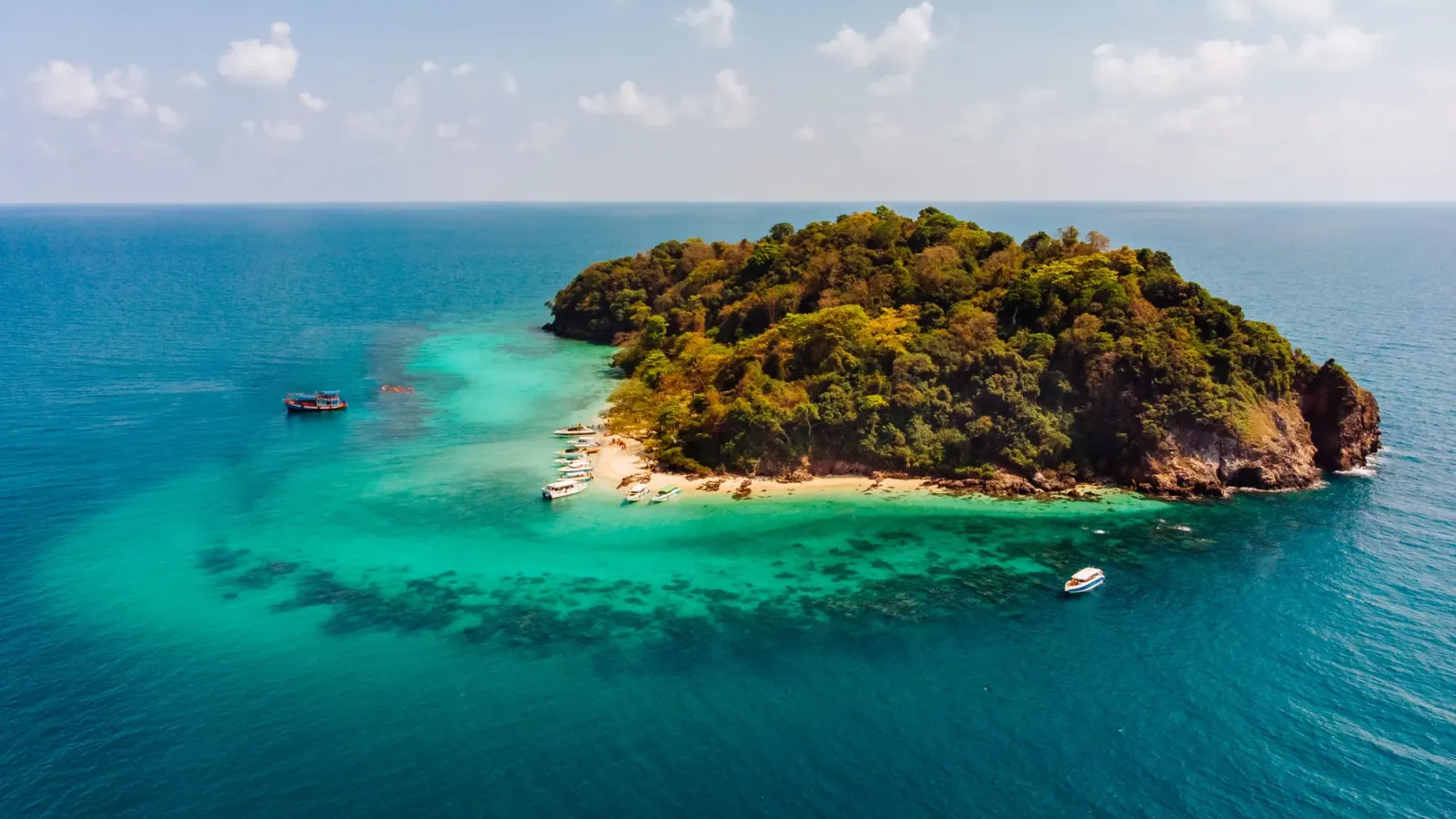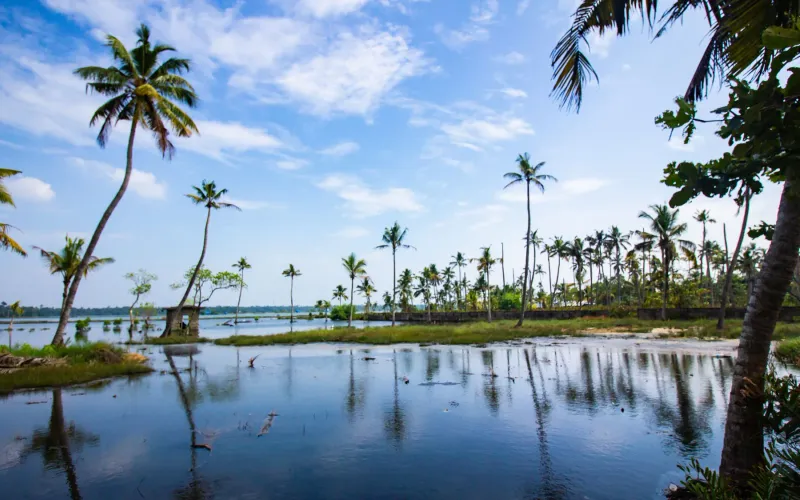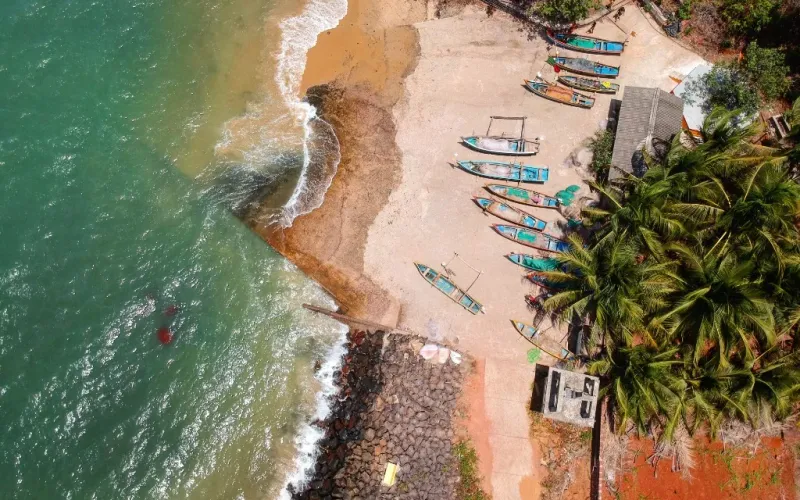

Scattered like emerald jewels across the warm azure waters of the Bay of Bengal, the Andaman and Nicobar Islands represent India's premier tropical paradise. While world-renowned destinations like Radhanagar Beach on Havelock Island attract thousands of sunshine seekers, the true magic of the Andamans lies in its remote, untouched islands. By stepping off the standard tourist trail, you discover deserted white sand beaches, pristine coral reefs teeming with marine life, dense tropical rainforests, and historic colonial ruins wrapped in ancient banyan roots. This 2026 travel guide reveals the finest offbeat island escapes in the Andaman archipelago.
1. The Quiet Majesty of Neil Island (Shaheed Dweep)
Located a short 60-minute catamaran ferry ride from Havelock, Neil Island (Shaheed Dweep) operates at a blissfully slow pace. Known as the 'Vegetable Bowl of the Andamans' due to its fertile soil and organic farming, Neil features flat terrain that is ideal for exploring on rented bicycles or scooters.
Bharatpur Beach offers a calm, shallow bay perfect for swimming, sea walking, and snorkeling over vibrant coral gardens filled with parrotfish and clownfish. On the western shore lies Laxmanpur Beach, famous for its dramatic natural limestone rock arch bridge (Howrah Bridge) and unforgettable sunsets where the sky turns brilliant shades of coral and violet.
During low tide at Laxmanpur Beach 2, visitors can walk out onto shallow reef flats accompanied by local marine eco-guides to discover sea anemones, clownfish, starfish, live brain corals, and sea cucumbers in natural tide pools.
On Neil Island, time moves at the pace of the gentle ocean breeze. It is a tropical sanctuary designed for total relaxation.
2. Exploring the Ghostly Ruins of Ross Island
Just a short 15-minute boat ride from Port Blair lies Ross Island (Netaji Subhash Chandra Bose Dweep). Serving as the administrative headquarters of the British Penal Settlement until a major earthquake in 1941, the island was abandoned to nature.
Today, Ross Island offers an uncanny, beautiful landscape reminiscent of ancient ruins. Massive roots of wild peepal and banyan trees wrap around the stone remains of colonial ballrooms, churches, bakeries, and officers' bungalows. Friendly spotted deer roam freely across the manicured lawns, while peacocks display colorful feathers along ruined stone pathways.
An evening Sound and Light Show on Ross Island brings the colonial history, maritime struggles, and freedom movement legacy alive against the backdrop of ocean waves and illuminated tree roots.
3. Scuba Diving & Marine Biodiversity in the Andaman Sea
The Andaman Sea boasts some of the highest marine biodiversity in South Asia, drawing scuba divers from across the globe. Professional dive centers on Havelock and Neil Island offer PADI-certified courses for beginners as well as deep dives for experienced enthusiasts.
Offbeat dive spots like Dixon's Pinnacle, Johnny's Gorge, and Barracuda Peak feature crystal-clear underwater visibility, where divers swim alongside manta rays, sea turtles, whitetip reef sharks, and massive shoals of trevally and tuna.
For adventurous night owls, bioluminescent night kayaking tours at Havelock Island let you paddle through pitch-black mangrove lagoons where microscopic plankton glow like stars under water with every stroke of your paddle.
4. The Wilderness of Baratang Island & Limestone Caves
For adventurous travelers, a day trip to Baratang Island in Middle Andaman offers a wild wilderness journey. The trip passes through dense Jarawa Tribal Reserve forests (where strict government regulations protect indigenous tribes) before reaching the Baratang jetty.
From the jetty, speedboats zoom through narrow mangrove channels where tree roots dip directly into salty creeks. A short 1.5 km jungle trek leads to massive, ancient Limestone Caves formed over millions of years by stalactite and stalagmite deposits. Nearby, visitors can also see rare Mud Volcanoes bubbling with natural geothermal gas.
Local guides along the cave trail point out fascinating geological formations hanging from subterranean roofs, shaped like elephant trunks, lotus flowers, and high cathedral domes.
5. Diglipur & The Twin Islands of Ross & Smith
Located in North Andaman, Diglipur is the ultimate frontier for offbeat island exploration. Diglipur's crown jewel is the Ross & Smith Islands—two pristine tropical islands connected by a natural 500-meter white sandbar that emerges at low tide.
Walking across the sandbar with turquoise ocean waters lapping at both sides is an unforgettable experience. Diglipur is also home to Kalipur Beach, a major nesting site for four species of sea turtles (Olive Ridley, Green Turtle, Hawksbill, and Leatherback), and Saddle Peak, the highest point in the Andaman archipelago (732m).
Trekking through Saddle Peak National Park takes hikers through dense tropical rainforests, past crystal mountain streams, to summit viewpoints offering sweeping panoramas of the North Andaman coastline.
6. Travel Logistics, Ferries & Best Time to Visit
The best time to visit the Andaman Islands is between October and May, when skies are clear, sea waters are calm, and underwater visibility is at its peak. Inter-island transport relies on high-speed private catamarans (Makruzz, Nautika, Green Ocean) or government ferries.
Ensure you book inter-island ferry tickets in advance during peak season. Mobile connectivity is strongest in Port Blair and Havelock (Airtel, Jio, BSNL), but network coverage is minimal on remote islands like Baratang and Diglipur.
7. Island Hopping Itinerary Options (6N/7D vs 9N/10D)
• **Classic 6N/7D Circuit:** Port Blair (2N) -> Havelock Island (3N) -> Neil Island (1N). Covers Cellular Jail, Radhanagar Beach, Elephant Beach snorkeling, and Neil Island rock arch.
• **Offbeat 9N/10D Grand Circuit:** Port Blair (2N) -> Havelock (3N) -> Neil (1N) -> Baratang (1N) -> Diglipur (2N). Ideal for adventure seekers wanting to cross Ross & Smith sandbar and explore limestone caves.
When planning inter-island catamaran rides, book morning departures (between 6:00 AM and 8:30 AM) to maximize daylight sightseeing and avoid afternoon ocean swells.
8. Responsible Island Travel & Environmental Etiquette
• **Coral Protection:** Never step on live coral reefs or touch marine animals during snorkeling and scuba diving.
• **Sunscreen Choice:** Use reef-safe, biodegradable sunscreen to prevent chemical bleaching of Andaman coral reefs.
• **Plastic Waste:** Avoid dumping single-use plastic water bottles on beaches; carry a reusable thermal bottle and refill at hotel water dispensers.
• **Tribal Sensitivity:** Strictly adhere to government regulations when passing through the Jarawa Tribal Reserve—taking photographs or offering food to indigenous tribe members is illegal.
When staying on Havelock or Neil Island, rent a lightweight gearless scooter to explore interior coconut plantation trails, hidden coastal coves, and organic village fruit stalls at your own relaxed pace.
Bypassing crowded beachfront tourist restaurants and eating at small island family eateries lets you sample fresh local sea fish curries, fried snapper, and coconut rice at genuine local prices.
Lastly, carry a lightweight waterproof dry bag (15L to 20L capacity) on all island boat trips to safeguard camera gear, smartphones, passports, and physical cash from sea spray and sudden tropical downpours.
For nature lovers visiting Neil Island, early morning low tide walks along the rocky shores of Sitapur Beach offer quiet opportunities to spot hermit crabs, sea anemones, and colorful shorebirds nesting in coastal cliffs.
When visiting Port Blair, don't miss exploring the historic Anthropological Museum, which houses rare artifacts, wooden tools, canoes, and historic photographs documenting the indigenous tribes of the Andaman and Nicobar Islands.
Scuba divers visiting Havelock Island during winter months (December to March) can witness spectacular underwater breeding runs of parrotfish, surgeonfish, and spotted eagle rays over deep coral reefs.
Additionally, visiting the Samudrika Naval Marine Museum near Port Blair offers fascinating exhibits on island geology, marine shell collections, and a preserved skeleton of a young blue whale.
By adhering to eco-conscious travel guidelines, visitors help preserve the fragile island marine ecology so future generations can marvel at untouched tropical reefs.
For nature lovers visiting Neil Island, early morning low tide walks along the rocky shores of Sitapur Beach offer quiet opportunities to spot hermit crabs, sea anemones, and colorful shorebirds nesting in coastal cliffs.
When visiting Port Blair, don't miss exploring the historic Anthropological Museum, which houses rare artifacts, wooden tools, canoes, and historic photographs documenting the indigenous tribes of the Andaman and Nicobar Islands.
Scuba divers visiting Havelock Island during winter months (December to March) can witness spectacular underwater breeding runs of parrotfish, surgeonfish, and spotted eagle rays over deep coral reefs.
Additionally, visiting the Samudrika Naval Marine Museum near Port Blair offers fascinating exhibits on island geology, marine shell collections, and a preserved skeleton of a young blue whale.
When planning inter-island ferry connections between Port Blair, Havelock, Neil, and Baratang, always maintain a buffer day before your return flight from Port Blair. Tropical weather shifts or rough seas can occasionally delay ferry schedules.
By adhering to eco-conscious travel guidelines, visitors help preserve the fragile island marine ecology so future generations can marvel at untouched tropical reefs.
For photography enthusiasts visiting Neil Island and Havelock, early morning light between 6:00 AM and 7:30 AM offers ideal soft illumination over white sand shores before daytime heat builds up. Low tide periods reveal pristine coral formations and natural tide pools perfect for close-up macro photography.
When planning inter-island ferry connections between Port Blair, Havelock, Neil, and Baratang, always maintain a buffer day before your return flight from Port Blair. Tropical weather shifts or rough seas can occasionally delay ferry schedules, making buffer days essential for stress-free travel.
MistyCurves